
Ice Storm and Wind Storm Trees in Derry, NH
What storms have hit Derry's trees?
| Storm | What the record says |
|---|---|
| December 11 to 12, 2008 ice storm | About two-thirds of New Hampshire's homes and businesses lost power; 432,000 of 685,000 meters out in the first 24 hours; some customers out as long as 14 days; Rockingham County among ten counties in FEMA-1812-DR |
| October 29 to 30, 2011 snowstorm | More than 300,000 of about 700,000 customers out statewide; snow on trees still in leaf broke whole trees and large limbs well beyond the trim zones |
| Late October 2017 wind and rain storm | As many as 450,000 Granite Staters lost power at some point, per the state's emergency management division as reported by NHPR; FEMA-4355-DR named Belknap, Carroll, Coos, Grafton and Sullivan counties, not Rockingham, for public assistance |
| March 2 to 8 and March 13 to 14, 2018 | FEMA-4370-DR (severe storm and flooding) and FEMA-4371-DR (severe winter storm and snowstorm) both named Rockingham County |
| December 18, 2023 rain and wind | Eversource reported trees and limbs down on highly saturated ground and more than 70 blocked roads across the state |
Sources, all checked Nov 16, 2026: NH PUC 2008 ice storm after-action report; Federal Register notice for FEMA-1812-DR; NH PUC October 2011 snowstorm report; NHPR, Nov. 3, 2017; Federal Register notice for FEMA-4355-DR; Federal Register notice for FEMA-4370-DR and 4371-DR; Eversource, Dec. 18, 2023.
The 2008 report holds a finding that matters to anyone with big trees near the street: most of the trees that brought down poles and wires fell from outside the utilities' existing trim zones. The utility trims along its lines; those trees stood beyond the strip the utilities keep cleared.
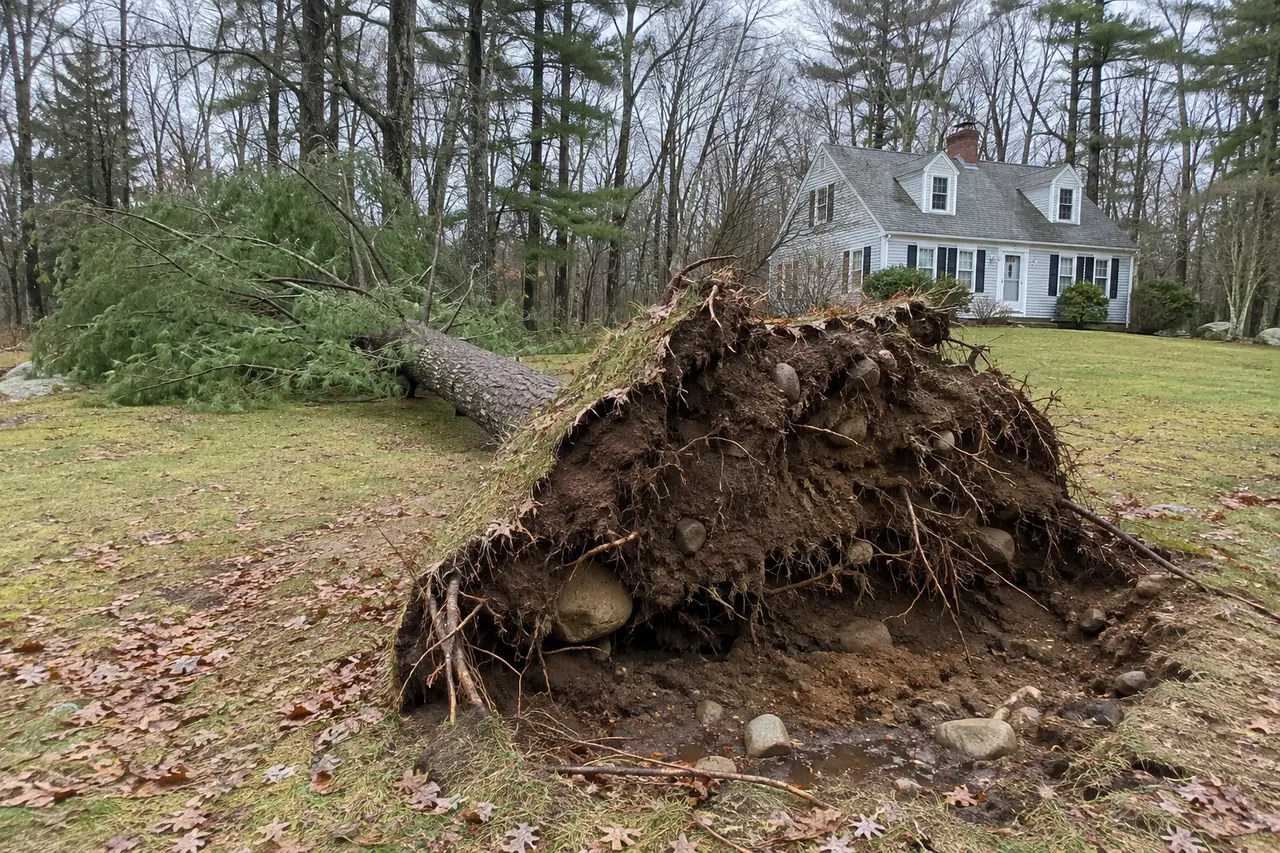
What should you do in the first hour after a tree comes down?
- Look for wires before you go near it. Eversource tells people to stay as far away as possible from a downed line and to call Eversource or 911 (Eversource downed lines page, checked Nov 16, 2026). The state's 2023 warning added: if a wire touches a tree, don't touch it, climb it or put a ladder on it (NH Department of Energy, checked Nov 17, 2026). Eversource also warns that broken equipment can charge the earth beneath your feet.
- Get people out of rooms under a damaged roof. A limb resting on a roof can shift as it is cut or as wind picks up.
- Photograph everything before anything is moved. The NH Insurance Department says to photograph or video the damage and list what was affected before cleanup or repairs begin (checked Nov 16, 2026).
- Call your insurer. The department advises contacting your agent or company as soon as possible to arrange an adjuster.
- Make only temporary repairs. Tarping a hole and keeping receipts is fine; the department warns that permanent repairs before inspection could lead to a denied claim.
Who pays when a tree falls?
The New Hampshire Insurance Department's homeowner FAQ says that, generally, "the insurance responsibility lies with whoever's property is damaged" (NH Insurance Department FAQ, checked Nov 16, 2026). If a healthy tree from a neighbor's yard lands on your house, your own insurer generally handles the repair. The neighbor's insurer would likely pay only if the tree was dead or weakened and the owner should have known it was dangerous (NH Insurance Department flood and storm page, checked Nov 16, 2026).
That last point cuts both ways. A dead ash or a split pine leaning toward the neighbor's house is the kind of tree that can shift responsibility to you. The department also notes that if your tree fell onto a neighbor's property, you may be responsible, and to check with your insurer.
Flooding is separate. Homeowners policies generally do not cover flood damage; flood coverage is available through the National Flood Insurance Program.
In what order does storm cleanup usually happen?
- The utility makes lines safe or cuts power to them. No private crew should work a tree that a primary line runs through until then.
- Trees on the house come off first, cut in pieces from above or lifted with a crane so the roof is not loaded further.
- Trees blocking the driveway are cleared so people and vehicles can get in and out.
- Hangers, broken limbs caught in standing crowns, are brought down before anyone works under them.
- Trees on lawns, fences and in the woods wait their turn.
HomeGuide puts emergency or storm work at $150 to $250 an hour and fallen tree removal, including hauling, at $100 to $600 (HomeGuide, checked Nov 17, 2026). A tree on a roof that needs a crane costs far more than one lying in a yard.
What about crews knocking on doors after a storm?
The New Hampshire Attorney General's office warned in 2022 that honest contractors usually do not need to go door to door, and listed a down payment over 50% of the job, full payment before the work is finished, and cash-only deals as warning signs (NH Department of Justice, March 10, 2022, checked Nov 17, 2026). The hiring page goes through what to put in writing.
What can you do before the next ice storm?
- Look up from the house. Note limbs over the roof, the line to the house running through a crown, and any tree with a split trunk or a lean toward the house.
- Have dead trees within reach of the house or the road taken down while the ground is open and crews have time.
- Prune heavy limbs back from the roof; the pruning page covers what the utility handles near wires.
- Check white pines in particular; the white pines page covers why they break the way they do.