
Lakefront Trees in Derry, NH: Beaver Lake, Big Island Pond and the Shoreland Rules
Which Derry lakes and ponds are covered?
The Shoreland Water Quality Protection Act covers lakes, ponds and impoundments "greater than 10 acres," fourth-order and larger streams and rivers, certain designated rivers, and coastal waters (NHDES shoreland FAQ, checked Nov 16, 2026). Two Derry examples:
- Beaver Lake covers 134 acres, with a maximum depth of 14 meters, according to the NHDES volunteer lake assessment report for 2019 (checked Nov 16, 2026).
- Big Island Pond is a 530-acre water body shared by Atkinson, Derry and Hampstead, according to the Town of Derry (checked Nov 16, 2026). The town notes it is on the state's list of impaired waters because of chlorophyll-a, phosphorus and cyanobacteria toxins.
NHDES says its list of water bodies is not complete and should not be relied on to identify every water body under the law (NHDES Protected Shoreland page, checked Nov 16, 2026). If you are on a smaller pond, ask NHDES's shoreland program.
What are the three distances that matter?
| Distance from the reference line | Name | What it means for trees |
|---|---|---|
| 0 to 50 feet | Waterfront buffer | Grid-and-point scoring; stumps and roots stay unless removal is approved |
| 50 to 150 feet | Natural woodland buffer | At least 25% of this area must be kept as natural woodland |
| Up to 250 feet | Protected shoreland | Excavation, fill or construction needs an NHDES shoreland permit |
Sources: RSA 483-B:9; NHDES fact sheet SP-5, Vegetation Management for Water Quality (2020); both checked Nov 16, 2026.
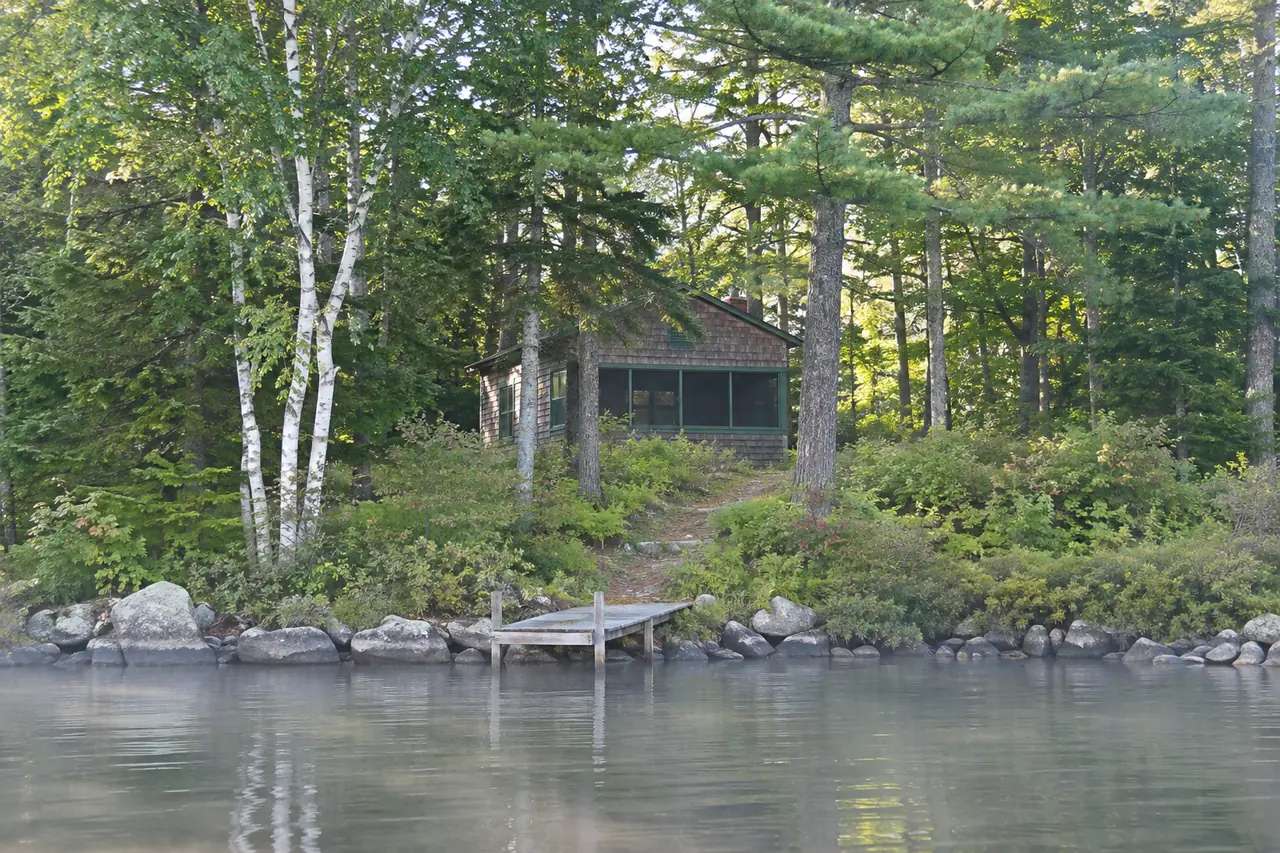
How does the point system work?
The waterfront buffer is divided into segments 25 feet along the shoreline and 50 feet inland (RSA 483-B:9, checked Nov 16, 2026). Each tree and sapling in a segment gets points by trunk diameter, measured 4½ feet above the ground, and shrubs and groundcover earn 5 to 10 points for a full segment. Trees and saplings can come out of a segment only if the trees and saplings that remain still score at least 25 points; shrub and groundcover points do not count toward that 25. Dead, diseased and unsafe trees are not counted at all.
The exact points per diameter class are in a figure in NHDES's SP-5 fact sheet. In practice, before a healthy tree comes out of a waterfront segment, someone has to count what is in that segment and do the arithmetic. The contractor will want to know you are on the water before they price the job.
Can a dangerous tree come down without a permit?
Yes, within limits. NHDES's SP-5 says any dead, diseased or unsafe tree with a structural defect that poses an imminent hazard "may be cut to ground level at any time without a shoreland permit," and it recommends keeping clear photos and a written confirmation of the tree's condition from a horticultural professional. The statute also allows removal of dead, diseased or unsafe trees, limbs, saplings or shrubs that pose a hazard to structures in the woodland buffer (RSA 483-B:9, V(b)(2)(C)).
"Cut to ground level" is the key phrase. The stump stays. Photograph the tree, the defect and the target before work starts; if anyone later asks why a tree is gone from the buffer, those photos are your record.
Why do stumps stay in the waterfront buffer?
Because roots hold the bank and the soil. State law says rocks and stumps and their root systems "shall be left intact in the ground unless removal is specifically approved," and NHDES's fact sheet says stump removal there requires a permit, with removed stumps replaced by pervious surfaces, new trees or other woody plants. Big Island Pond's phosphorus problem is a reminder of why: soil that washes into a lake carries nutrients with it.
Can you prune for a view of the lake?
The NHDES FAQ says trimming, pruning and thinning branches "to protect structures, maintain clearances, and provide views" does not need a permit, within the limits in the vegetation management fact sheet. SP-5 recommends pruning only the bottom third of a tree and allows pruning as long as tree health is not endangered; shrubs and groundcover can be trimmed to no less than 3 feet. A view opened by limbing up a few pines is allowed; a view opened by taking out the trees is a different matter.
What if the lot also borders a wetland?
Derry's zoning has its own layer. Within 150 feet of a prime wetland, forestry and tree farming "shall first be reviewed and approved by the Conservation Commission," per § 165-80A(2)(a), read in a published copy of Derry's zoning ordinance (checked Nov 17, 2026). See Derry tree rules for the details and what the section does not say.
Does lakefront work cost more?
Often. Leaving stumps, lowering pieces instead of dropping them toward the water, limited access along narrow lake roads, and the scoring step can all add time. HomeGuide's ranges for removal and pruning are on the prices page. Call (603) 704-4602 or send a request and mention which lake or pond you are on.